THE CORE IDEA
1
Separete ownership from use
2
Lock in perpetual care
3
Guardians hold long-term custody
4
The Foundation safeguards purpose
DISTINGUISH OWNERSHIP FROM GUARDIANSHIP
This model defines two complementary roles: ownership of the land as an asset, and its long-term care through trusted guardianship. Guardians are granted lasting use rights and responsibilities, while the Terra Agora Foundation ensures the land remains protected from sale or mortgage.
LOCKS IN LONG TERM CARE
Land can enter the Foundation through donations, long‑term use rights, or conservation agreements. Once accepted as a Strategic Asset for regeneration, it is held outside speculation and cannot be sold or mortgaged. This legal foundation allows regeneration work to unfold over decades instead of short project cycles.
WHO CARES FOR THE LAND
ENTITIES
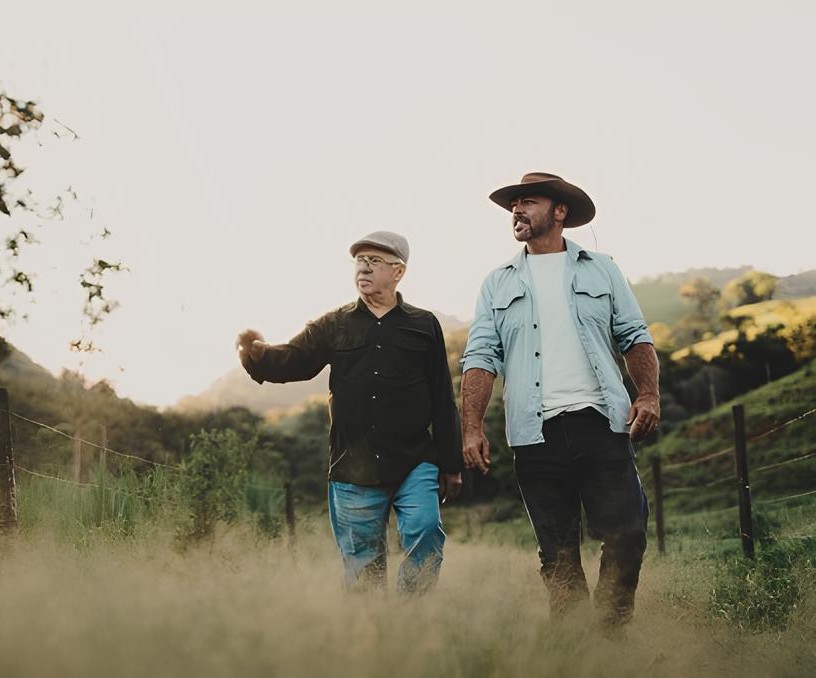
Guardians hold long-term custody of the land, granting them the rights and responsibilities to regenerate and care for it.
Guardian Entities are trained collectives that take on long‑term responsibility for specific landscapes. They develop viable activities, care for ecosystems, and commit to multi‑generational stewardship. They do not own the land; they care for it.
ROLES AND RESPONSIBILITIES
The Foundation safeguards purpose; Guardians run projects; communities co‑create stewardship around the land.
The Foundation acts as Ultimate Guardian: it protects the land, sets rules of care, monitors performance, and intervenes if commitments are broken. Guardians implement regeneration on the ground and involve neighbours, municipalities, and local actors.
Download Brochure
Download Brochure
GUARDIANSHIP IN ACTION
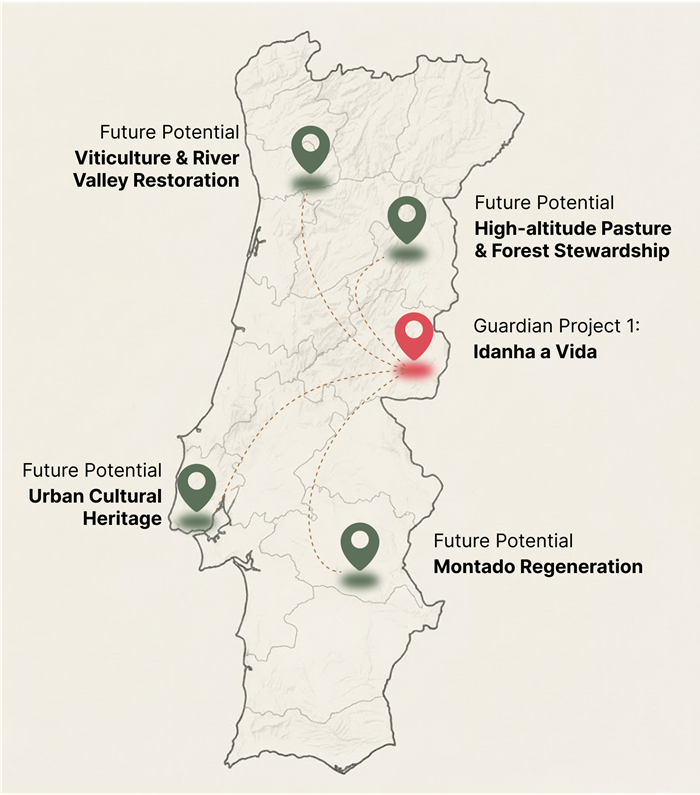
We support regenerative livelihoods rooted in each landscape, train current and future Guardians through the Academy, host living laboratories where ideas are tested in real places, and weave a national action network aligned with Portugal’s climate, biodiversity, and territorial goals.
TIME HORIZON AND FINANCIAL LOGIC
Regeneration needs decades. The model aligns legal, human, and financial design with this timescale.
The Foundation focuses its funding on land protection, governance, and accountability. Guardians are supported by independently managed capital and partnerships. This clear separation keeps incentives transparent and allows care for land to continue beyond any single person, project, or funding cycle.

PEERS IN PERPETUAL LAND STEWARDSHIP
To encourage Rewilding as a holistic conservation strategy in the Route of Parks of Patagonia in order to counter the species extinction crisis and the climate crisis, by creating National Parks and marine parks, restoring ecosystems, and strengthening local communities’ connection with nature.
Achieves its vision acquiring land and entering long-term use right agreements, ensuring that “no political or commercial interests can interfere and nature gets protection into the future”
For over 30 years, has removed land from speculation so that it can be used for community-led projects in urban settings.
Terre de Liens movement draws its originality from the articulation between an associative network active throughout France, a solidarity investment company and a foundation recognized as being of public utility.
Stiftung trias was established in 2002, to help community groups and co-housing projects access financing. trias takes land off the market by separating the ownership of land and buildings
ExRotaprint is a model for urban development that rules out financial profit through ownership and establishes a heterogeneous, open environment for all community groups.
Agrarian Trust catalyzes support for next-gen farmers and regenerative agriculture by working with communities to acquire and steward land.
With donations and perpetual bonds, we free up agricultural land and lease it to nature-friendly farmers and gardeners, who with food production demonstrably have a positive impact on the vitality of our living environment.
By purchasing land and subdividing it into a number of ecological residential smallholdings, this simple, practical solution helps create the necessary conditions for those seeking to pursue land-based livelihoods.